Baking On The BBQ

Baking On The BBQ

Now more than ever, cooking and baking have been bringing joy to Canadians. Creating new things in the kitchen has provided entertainment and comfort throughout the past year.  Spring is here and it’s time to take the fun outside. Your grill can offer some creative methods for making fabulous baked desserts the whole family will love, and as a bonus, you won’t have to heat your oven or your home to get that delicious result.

We went to the experts on this one and checked in with Kyla Kennaley, Pastry Chef and Judge: The Great Canadian Baking Show Season 3 & 4, to ask our most burning questions when it comes to baking on the barbecue.
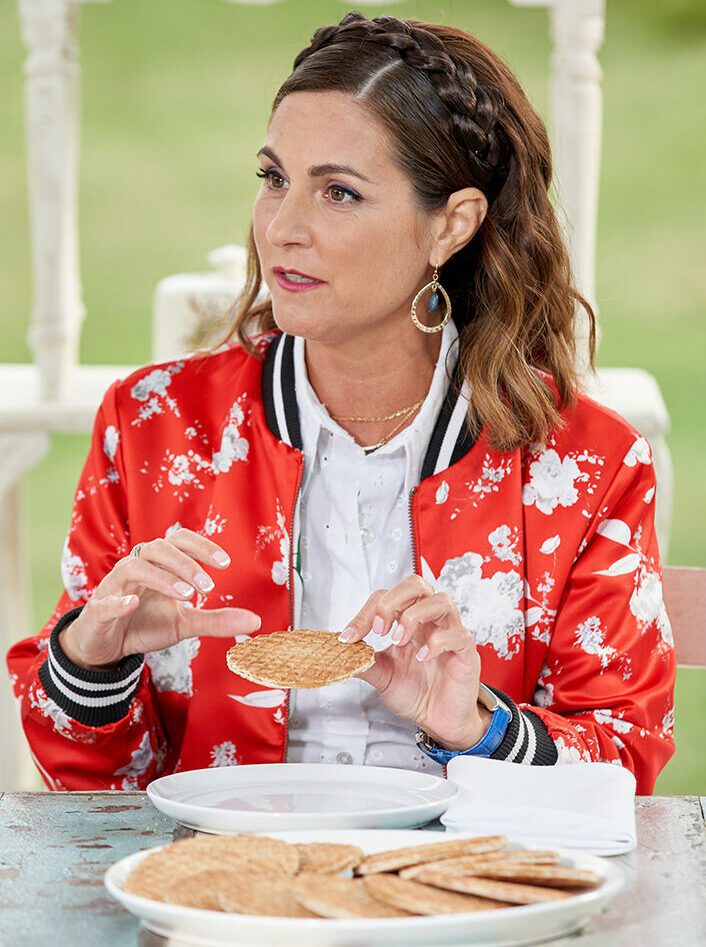
Why bake on the barbecue?

“Well, it’s cooler to cook on a barbecue than in a hot kitchen, which can be especially important in summer. The grill allows for controlled heat, and you can create a convection current by heating the grill to temperature, turning off one side of the burners, and baking on that side. This can be a huge advantage! Start by experimenting with drop cookies when you’re ready to bake, as it’s easier to learn how to control your baking with cookies before moving on to cakes and pies. Remember, even heat is the key to success when baking on the barbecue!”

What are some of the advantages of using a barbecue?

“A barbecue heats up faster than your oven, and a convection current bakes more evenly and cooks more quickly than an electric radiant heat oven. The heat factor can be particularly helpful, especially for holidays, as it frees up your oven to cook your turkey or roast beef with the drippings in the pan. Otherwise, you can always reheat the meat on the barbecue after resting it for an added barbecue smoky taste.

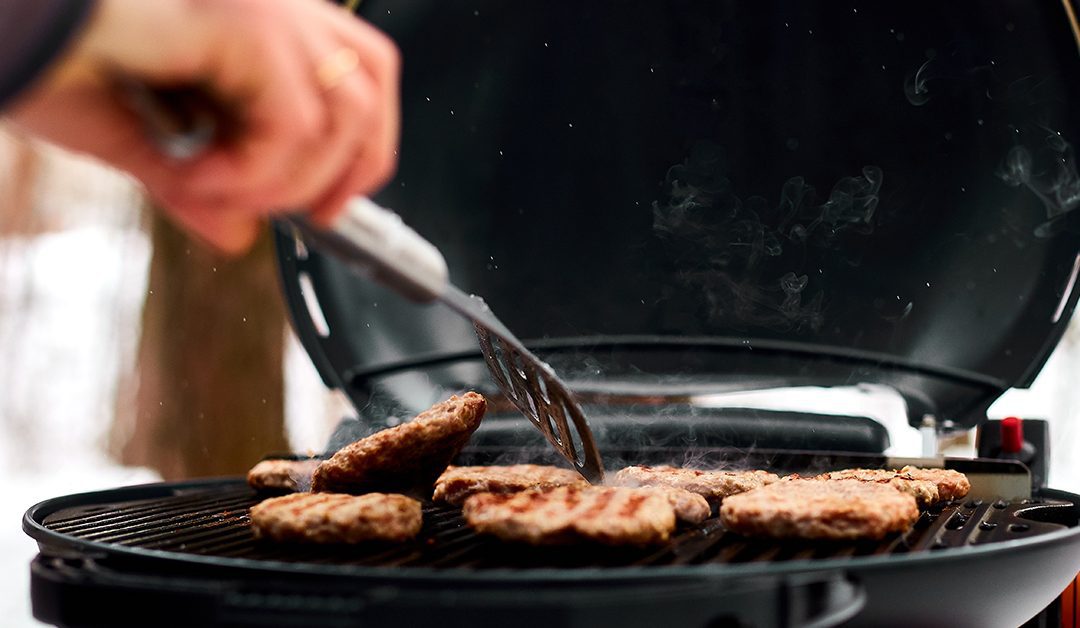
Baking on the barbecue allows you to entertain your guests and enjoy the great outdoors while you’re preparing dessert. Try baking a cake, brownies or bread pudding in a cast iron pan baked right on the grill – it produces a nice crispy edge, and you can use your side burner to make a creme anglaise at the same time.

And lastly, the barbecue adds a smokiness that is essential to any great grilled meal or baked barbecue treat.”

Charcoal vs Gas?

“Gas is controlled even heat and popular in most homes and apartments. However, charcoal is also an excellent option for cooking and baking, and can produce similar results to a gas grill.” 

Favourite Barbecue Tools?

“I would suggest two essential tools for any serious griller: heavy oven mitts with long sleeves for excellent protection while working with the high heat of the barbecue, and a few good quality cast iron pans in multiple sizes so you always have what you need when the grilling mood strikes.”


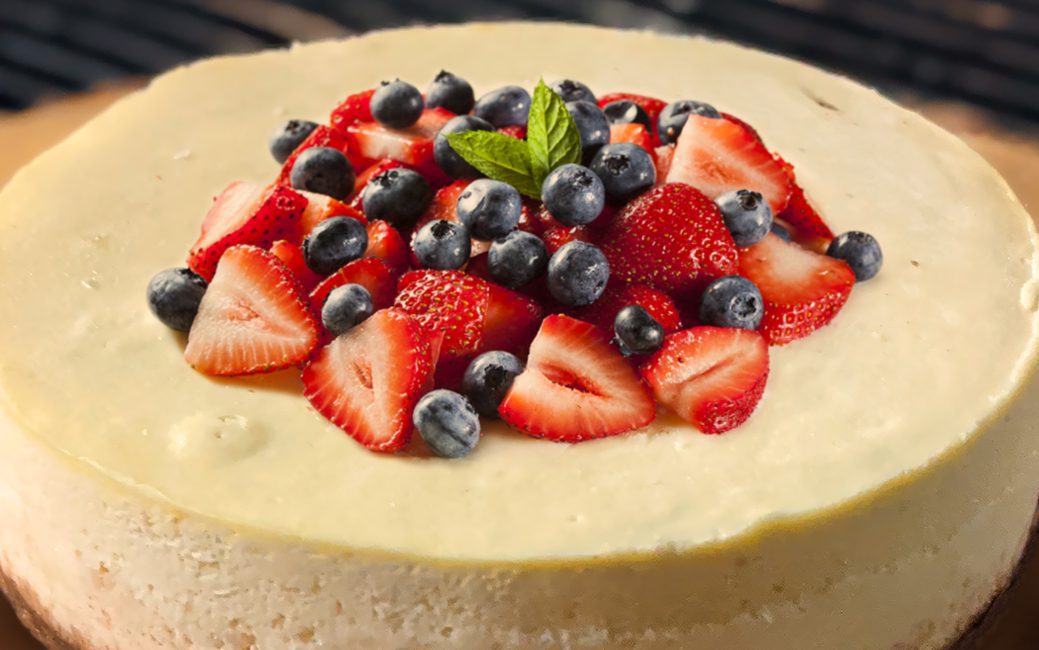
This great advice is the perfect place to start if you are interested in baking on the barbecue at home. If you’re feeling inspired, consider trying out this cheesecake recipe from Maxim Lavoie, BBQ Guru, House of BBQ Experts. This cheesecake is delicious to eat as an afternoon snack or as a breakfast treat the next day, and the whole family can enjoy this cheesecake together. Maxim’s added words of advice: hide a piece for yourself; the cake won’t be there for long!

House of BBQ Experts Grilled Cheesecake


Ingredients

For the crust:

  • ½ cup graham crumbs
  • 1 tablespoon brown sugar
  • ¼ teaspoon salt
  • ¼ teaspoon freshly grated ginger
  • 2 tablespoons Baking Spice Blend, such as House of BBQ Experts’ Cake spice mix
  • 2 tablespoons melted butter

For the filling:

  • 375g cream cheese (1½ packages)
  • ½ cup white sugar
  • 2 eggs
  • 1 teaspoon vanilla extract

Suggestions for topping:

  • Fresh berries or fresh fruit slices
  • Caramel topping
  • Fruit compote
  • Chocolate shavings
  • Whipped cream

Cooking Method

  • Preheat the BBQ to 325 °F.
  • In a small bowl, mix all the ingredients for the crust. Press the mixture into the bottom of a barbecue-safe dish – make sure the crust is approximately 1cm thick
  • In a large bowl, beat the cream cheese, white sugar, and vanilla extract until smooth. Add the eggs, one at a time, and beat on low speed after each addition, until your filling is well blended. Pour filling into the crust.
  • Bake over indirect heat on the BBQ for 20 to 25 minutes with the lid closed. After 20 minutes have passed, you may peek. Similar to baking in a conventional oven, to ensure the filling does not get overcooked, stick a toothpick in the center of the cheesecake. If it comes out clean, it is fully baked.
  • When baking is done, let the dish cool and then refrigerate for 6 hours.
  • Once the resting time is over, top as desired, serve and enjoy!

Max’s Pro Tip

“While waiting, prep a piece of meat for dinner. A low and slow BBQ recipe will keep the BBQ going all day, filling the air with an amazing smell and serving as a warming station at the same time. Truly, there is no better way to enjoy being outside!
 

How To Plan A Fireside Date At Home

How To Plan A Fireside Date At Home

This Valentine’s Day looks a little different for most of us due to the ongoing pandemic, but it doesn’t mean we can’t bring romance and date nights home. With the significant changes in the way we spend our time, it’s essential to make your date night at home feel just as exciting as if you were spending the evening out. The best part? You can come as you are, no dress code required.

Planning a successful fireside date night at home takes a few elements and a little creativity. The following five essential components are the perfect combination for the most romantic date. 


Food

Food is one of the best parts of any evening, and that is especially true when it comes to date nights, as food can be an activity or provide an opportunity to try something new. Cooking together can be a great date night idea, no matter what you choose to cook. If you’re not interested in lifting a finger, this could be a great time to explore local restaurants that deliver directly to your front door. That way, you can be adventurous with new cuisine without having to leave the comfort of your couch.


Drinks

The drinks or beverages you choose may seem like an insignificant detail but making sure to have options available can make your date night feel like an extra-luxurious occasion. Consider offering multiple drinks throughout the date, such as water to start, a cocktail or a glass of wine as you head into dinner, and finishing off the evening with a nightcap.  


Ambience

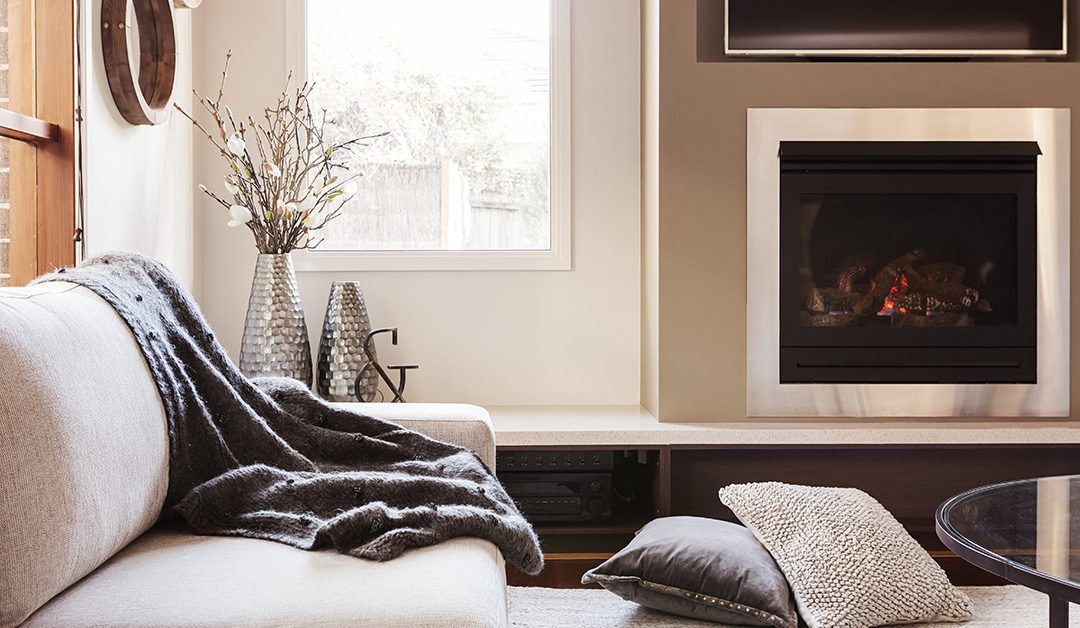
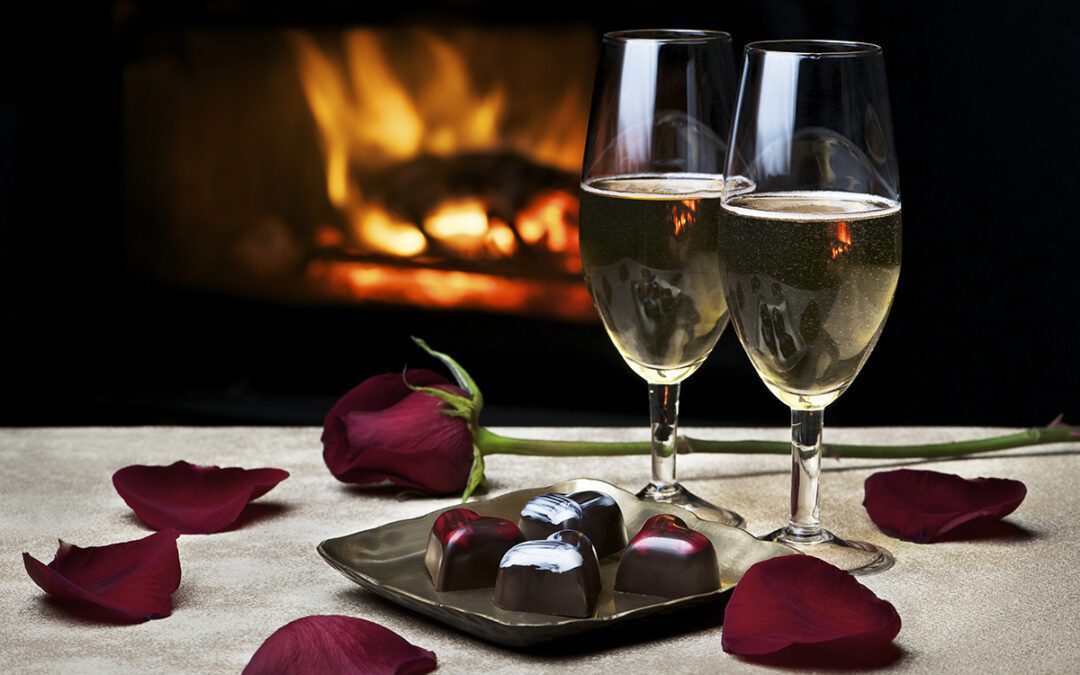
The ambience in your home is a big part of the evening as it will truly help set the mood. Lighting the fireplace adds instant romance to your room, whether you have a wood, electric or gas fireplace. If you find yourself without a real fireplace in your home, you can create that ambience by turning on a fireplace video. No matter how you accomplish that fireside feeling, this little touch makes a huge difference, and also works well if you happen to be planning a fireside picnic in the living room for your date.


Warmth

Keeping your home feeling warm and comfortable is a significant part of a successful date night, especially as you’ll most likely be spending the entire evening in one room. So set your home’s temperature or fireplace to a suitable level; if you’ve decided to get dressed up, you’ll want to feel comfortable without a jacket or a sweater. As the evening starts to wind down, consider setting out a few cozy blankets for extra comfort and warmth.


Entertainment 

The evening’s entertainment portion is where you can get creative and have fun with your plans for the night. Do you prefer a quiet activity or something with a bit of excitement? Whether you plan to cook a meal for two together in the kitchen or a night of charcuterie and board games, choose something that both parties will love and enjoy. 


Now that you’ve gathered everything for your romantic fireside date night, all that’s left to do is pick the time. Consider sending your partner or spouse an invitation a few days ahead so they’ll know to reserve their spot on the couch. All of these little details can make up the perfect night at home and the ideal way to spend February 14th, or any day, with someone you love.

Santa Claus Briefed On Latest Fireplace Models

Santa Claus Briefed On Latest Fireplace Models

For Immediate Release

Santa Claus Briefed On Latest Fireplace Models

Fireplace Experts Once Again Ensure Santa Is Able To Get In Safely

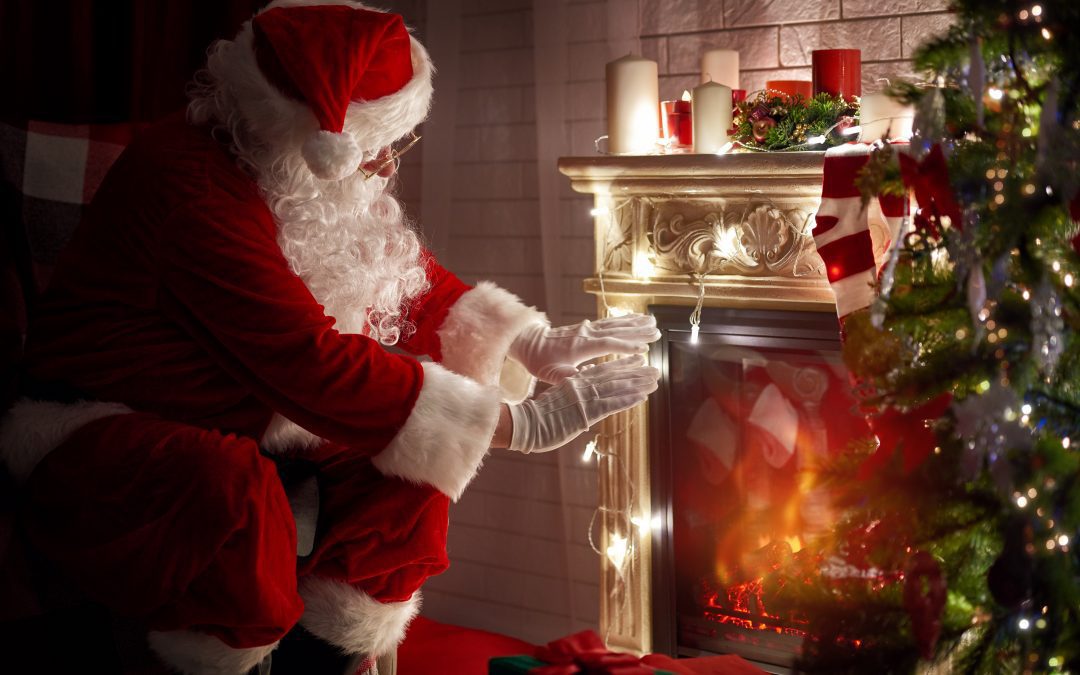
Huntsville, Ontario — The Hearth, Patio & Barbecue Association of Canada (HPBA Canada) is pleased to report that Santa Claus has once again received his annual briefing on the latest fireplace models, ensuring he will be able to successfully gain entry into homes around the world.

An annual tradition dating back decades, the briefing which took place last evening included Santa, senior officials from the North Pole, and engineers and design experts from across the fireplace industry who design the fireplaces found in homes across Canada and around the world. The briefing was held via Zoom.

“This is a privilege we take very seriously,” said Laura Litchfield, President of HPBA Canada. “Given that the closest inhabited area to the North Pole is in Nunavut, Canada, we feel a responsibility to make sure that Santa is as much a fireplace expert as the people who make them.”

“The fireplaces that are made today are quite advanced, with new technologies to increase heating efficiency and burn cleaner than ever before,” said Adam De Caire, Director of Public Affairs with HPBA Canada. “We want to make sure this new technology doesn’t get in Santa’s way on Christmas eve. He has a lot of ground to cover.”

The briefing also included safety tips for Santa, such as never going near a lit fireplace, and keeping stockings, gifts, and the Christmas tree a safe distance away. As always, Santa asked that these safety tips be passed on to people everywhere.

The fireplace briefing from HPBAC was followed by a briefing from The Locksmith Association, to address homes currently without a fireplace.

The Hearth, Patio & Barbecue Association of Canada is the national non-profit industry association supporting manufacturers, distributors, retailers, and support service providers in the hearth, barbecue, and outdoor lifestyle industries.

Related Links: https://hpbacanada.org/consumer-resources/product-safety/

–30–

Media Inquiries:
Adam De Caire
Director of Public Affairs
Hearth, Patio & Barbecue Association of Canada
adam@hpbacanada.org

Christmas Inquiries:
Santa Claus
North Pole
H0H 0H0
Canada

Enjoy Your Gas Fireplace Safely (And Often)!

Enjoy Your Gas Fireplace Safely (And Often)!

A gas fireplace serves as one of the safest and most reliable appliances in the home, providing both heat and ambiance at a moment’s notice. Gas fireplaces are clean burning, require little maintenance, and can be an important source of heat in an emergency situation such as a power outage.

Because efficiency and safety are important issues, HPBAC recommends that a gas fireplace be professionally serviced at least once a year to ensure top performance and aesthetic appearance. A qualified professional inspects the burner, fan, venting, pilot light and thermostat, and even cleans the glass. Further, a carbon monoxide detector should be present in the home. 

Here is a full list of recommendations to ensure you are getting the safest and most enjoyable experience out of your gas fireplace:

Safe setup

  • Keep a fire extinguisher on hand and place smoke detectors throughout the house. Test the smoke detectors and batteries regularly. See that the extinguisher is in good working order and that all family members know how to operate it.
  • Obtain a building permit prior to installing or replacing your hearth appliance, as required by the laws in your area.
  • Advise your insurance company about the installation or replacement of your hearth appliance.
  • Have your hearth appliance installed out of the way of foot traffic and away from furniture and draperies.
  • To fully understand the necessary steps involved in proper operation, read the manufacturer’s instruction manual for your specific hearth product.
  • If your hearth appliance is being installed in a home during construction or renovations, do not operate it until the area is thoroughly cleaned; drywall dust and other contaminants may harm the fan motors and burners.

Using your hearth appliance

  • Do not store combustible materials, gasoline or other flammable liquids near your hearth appliance.
  • Never leave a child alone in a room with a hearth appliance. If your child is not in a playpen, an adjustable gate system that fits most hearth appliance areas can be installed which allows adult access to the hearth appliance but keeps kids outside in the safety zone. Alternatively the same kind of safety gate system can be used to cordon off the entire room to prevent your child wandering into the room alone.

Regular maintenance

  • Clean the glass regularly (but never when it is hot). It is recommended to use a glass cleaning product specifically intended for fireplace glass, available through most hearth retailers or hardware stores. Never use abrasive products or ammonia-based cleaners which may scratch the glass surface.
  • Maintain your hearth appliance regularly in accordance with the manufacturers specifications, and industry best practices.

To discuss any of these matters, feel free to contact:

Adam De Caire

Director, Public Affairs
HPBA Canada
(647) 998-4235
adam@hpbacanada.org

The Perfect Time for Cold Smoking

The Perfect Time for Cold Smoking

Have you ever tried smoked salmon? Personally, it’s my favorite snack and I love making it. It’s made by cold smoking, a technique used to preserve meat, and is now considered a renowned delicacy worldwide. To this day, this refined preservation method is employed often, in hopes of storing meat for a long time without it going bad. Not only does smoking kill harmful bacteria, it also gives a wonderful smoky flavor to your dishes. There are many ways to smoke, but here’s a very simple way to elevate your cooking game to the next level.

My favorite smoking method is to cold smoke, which I love doing with different foods, but more particularly with fish. To cold smoke, you must first understand that it is not a source of heat that will cook your meat; instead, the smoke penetrates each layer and slowly cooks it. Hence why it’s called cold smoking. This method requires the ambient temperature to be favorable. Fall to early winter and spring seasons are ideal as it’s not too warm outside. If the smoking isn’t done in a smoker, you can use a barbecue with a large grid. The reason for this is that we want the food to be as far as possible from the heat source while it’s smoking.

These are the very simple steps I use when cold smoking which have never let me down:

If cold smoking meat or fish, you must brine your piece in a mix of your favorite spices and salt for at least 12 hours in the fridge, to cure the meat and stop bacterial growth. The quantity of spice depends on the size of your filet. Make sure your filet is well covered with your favorite rubs and tightly wrapped in your fridge, to contain the delicious yet “fishy” smell.  When ready to go, gently rinse your fillet and pat dry. If you are planning to cold smoke nuts, cheese or fruits, you can skip this step.

  • Check the outside temperature! To cold smoke, you must make sure that it’s between 4 and 15 degrees Celsius. Your smoking session will last 3 to 4 hours, so do it under the warm midday sun or after sundown to stay within that temperature range as much as possible.
  • Fill the pellet holder of your choice with enough pellets to fulfill a 3-4 hour smoking session and light the pellets on fire. Wait until the pellets have burned a few centimetres with a strong flame, then blow it off to keep the smoke going. You want to make sure the fire is strong and will work its way through after you set it up and forget about it. Too close to the fire? Don’t hesitate to wear gloves.   
  • Place the smoking pellets at the opposite end of your fish inside your BBQ, either under or on your heat deflectors.
  • After making sure you have good airflow and that your BBQ is cold smoking, close the lid and let the flavor-infused smoke slowly cook your meat.
  • For a milder flavor, smoke your meat or fish for 3 to 4 hours, and up to 10-12 hours if you prefer a very intense flavor. No matter what, you’re sure to enjoy a delicious and simple dish!

Remember that smoking with maple, cherry, and apple woods will render a softer smoky taste while hickory, oak, or mesquite will  make it more pronounced.

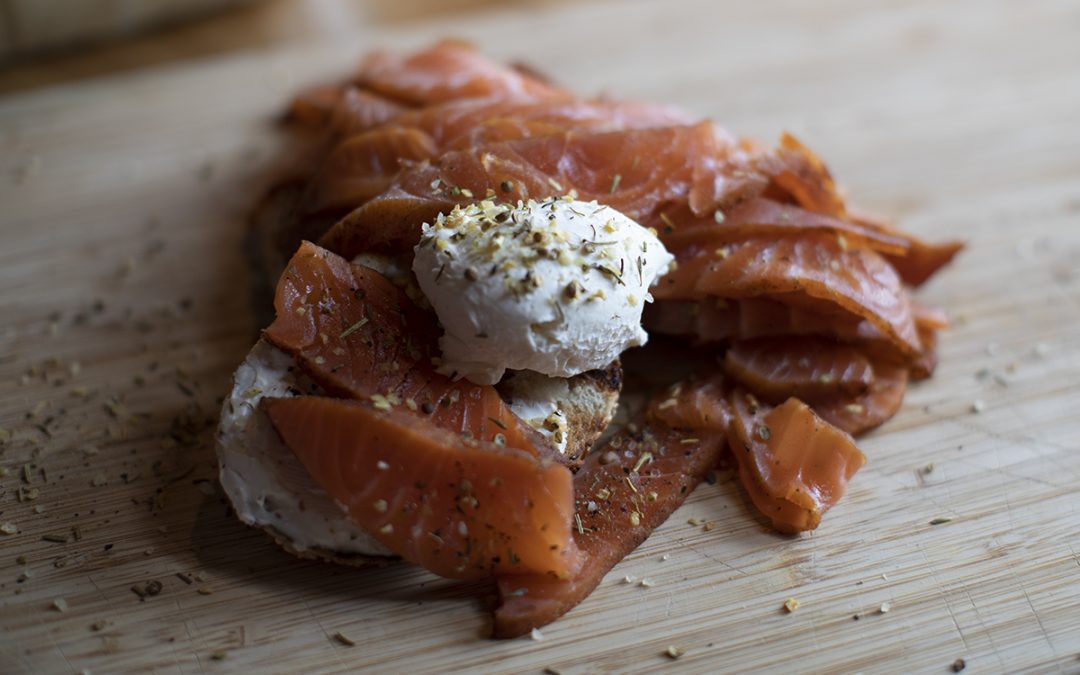
I love this simple recipe on any given day. Smoked salmon is great on salad, can be enjoyed with a cream cheese bagel the next day, or as a topping on white pizza. Well… that’s another recipe!

Enjoy your barbecue at this time of the year and get smoking!

For more recipes and barbecuing techniques, visit www.bbq-experts.com.

10 Tips for Grilling in Winter

10 Tips for Grilling in Winter

Temps are falling, days are getting shorter, and there’s every indication that this season we will be staying in and cooking at home more than any winter before.

Here’s one way to get by: don’t put that grill or smoker away. Instead, embrace backyard cooking through the fall and all winter long.


The following are 10 tips to make the most of grilling in the coming months:

  1. Don’t peek! Heat escapes quickly and you’ll be adding on cooking time. Limit lifting the lid except for turning and flipping foods.
  2. Plan on adding 25% more cooking time to compensate for cold temperatures. Use a reliable food thermometer to check.
  3. Consider adding a propane heater to your patio this year. Of course, these heaters can make barbecuing and entertaining in winter much more comfortable.
  4. Make shorter trips outside by moving your barbecue grill a little closer to the house, but make sure you still keep it at least 10 feet from any buildings or structures. Never grill in enclosed spaces, such as a garage or under an overhang, that can trap deadly carbon monoxide.
  5. Position gas grills so the wind is perpendicular to the gas flow, and not blowing the flame down the burner tubes. A sturdy patio umbrella set on its side can also serve as a wind block. When lighting the grill, do not turn the handwheel on the propane tank all the way on. Instead, use a single turn before lighting.
  6. Check that everything is in working order before using your grill. Don’t force a frozen knob or grill lid – you’ll risk cracking it or breaking the seal. Instead, move your grill to a garage where it can thaw or use a hairdryer.
  7. You’ll want to dress warmly, but avoid hazardous bulky clothing and tuck in loose scarves. A pair of easily-removable boots or shoes is a good idea when making trips in and out of the house. You’ll find heat-resistant gloves with plenty of dexterity are worth the investment.
  8. The days are shorter in the winter, and you’ll likely be grilling in the dark. While your favorite flashlight works, it can be hard to juggle with your grill tools. Clip-on or magnetic grill lamps are a handy upgrade for monitoring your cooking.
  9. Consider a wireless remote or instant read thermometer your new best friend. A leave-in remote thermometer allows you to monitor cooking temperature while you stay warm inside, and an instant read thermometer will minimize your time in the cold.
  10. When not in use (and only when completely cooled), protect your grill from the elements with a snug cover.


If you’re not planning to grill over the winter, it’s important to protect your grill from the harsh winter elements. Learn more here: hpbacanada.org/winterizing-your-barbecue.