Designing the Perfect Outdoor Kitchen

Designing the Perfect Outdoor Kitchen

Relax, socialize, eat… These daily activities take place largely outside in summer months of the year. Current barbecues have multiple functions and offer different cooking possibilities. With so many different cooking options, we can prepare the entire meal outdoors!

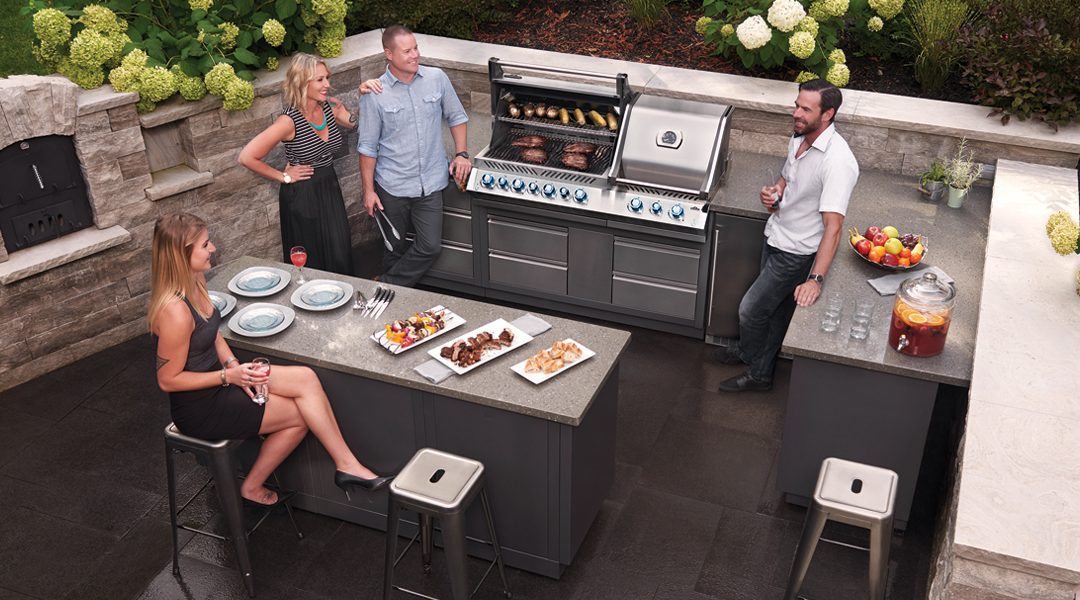
Creating a kitchen area around the grill allows the cook to enjoy family and guests while cooking – making the grill not only a utilitarian appliance, but also a social gathering place. There are a wide range of home kitchen appliances built for outdoor use. Fridge, ice machine, pantry, beer keg… everything you need.

Quality is Key

It’s important to choose quality appliances and products that are designed for outdoor use. Quartz or granite countertops are suitable for an outdoor kitchen, but a protective sealant must be applied every year to preserve the luster of the stone. Concrete also needs to be sealed regularly. Another option is a non-porous material such as neolith, not requiring any yearly maintenance. Appliances and materials of good quality are essential for the sustainability of an outdoor kitchen. Even with protective coverings for the winter months, appliances must be able to withstand extreme temperature ranges, so buying good quality appliances that are suitable for outdoor use is crucial. Specialty retailers generally offer good warranties.

Plan Ahead When Designing

Be sure to always check dimensions and sizing of new appliances in order to integrate them without trouble into the kitchen. Although you may be only installing a few features now, proactively think about what else you would like to add in the future so you have the space to do so. Accounting for counter space is crucial – side burners, sinks, portable appliances and a work area all take up counter space. If the area is small, you may want to stick to a grill, a prep area and a space for the trash. Installing a sink with running water available in your outdoor kitchen is very practical. However, this requires plumbing work and the convenience may not outweigh the costs, depending on the configuration of your outdoor area.

Smart and Stylish Design

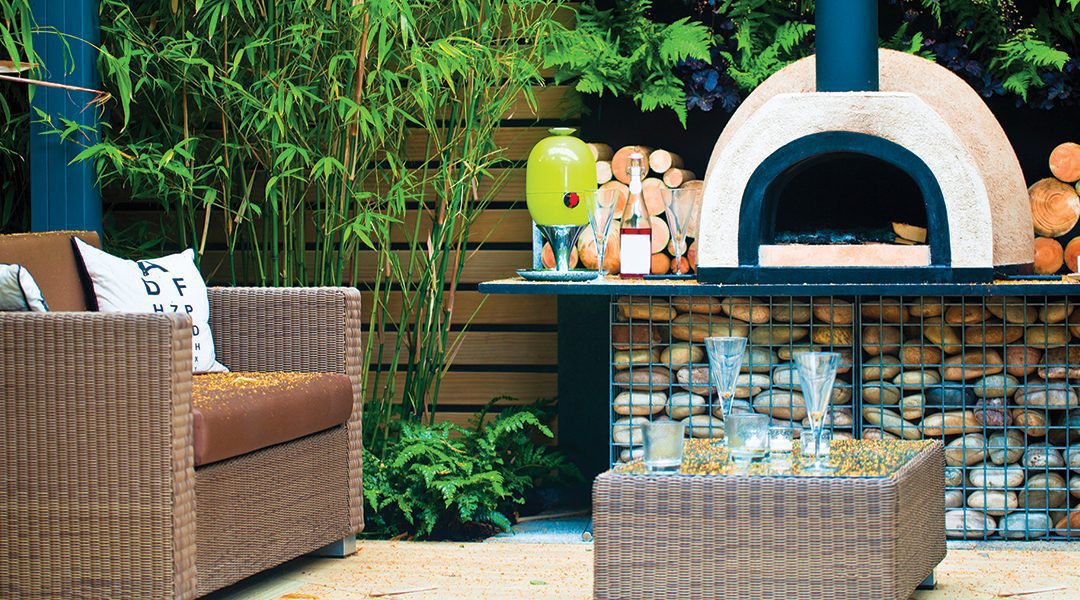
Make your outdoor kitchen an extension of your home – both in use, but also in style and design. Be sure to choose colours and styles that flow with the rest of the home and consider tying in different features to match your indoor kitchen, whether it be your cabinet colour, backsplash or countertop. This will harmonize the feel of your home. Also, remember to consider the amount of direct sunlight your outdoor space receives – dark colours can become very hot. You may want to avoid a dark counter if your outdoor kitchen is exposed. It’s important to prioritize what is important for you and your family to make the most of your outdoor living area. Don’t be afraid to start by brainstorming your dream outdoor kitchen and working backwards to ensure you meet your budget.

Combat Climate Change Through Energy Conservation & Renewables

Combat Climate Change Through Energy Conservation & Renewables

With continued innovation in the energy sector and government regulation being put in place in the fight against climate change, Canadians are becoming more aware of the ways we can help to reduce emissions and improve air quality.

Wood is Good

Choosing to burn locally-sourced, seasoned wood as a source of heat in an efficient appliance can be a great way to both reduce your dependence on the power grid and to reduce your home’s emissions. The Canadian hearth industry has continued to develop innovative products that substantially reduce particulate matter emissions which contribute to air quality concerns. Advanced technology, certified wood stoves can require 1/3 less wood to generate the same amount of heat as an old uncertified stove, saving homeowners both fuel and money. If you’re interested in learning more about best wood burning practices, visit the EPA’s Burn Wise website for all the information you need!

The fact is that localized air quality issues associated with wood burning are almost always caused by old, outdated wood stoves or older technology outdoor wood boilers. New technology wood stoves are a world apart from their older counterparts.

HPBAC promotes wood stove changeout programs across Canada. These programs help retire old, uncertified stoves and replace them with cleaner-burning, more efficient EPA/CSA-certified stoves by offering incentives. Wood stove changeouts are hugely beneficial, especially when replacing stoves made prior to 1992, when wood stoves had limited control on smoke emissions. By changing out an old unit for a new certified stove and using good wood burning practices, homeowners can reduce particulate emissions by over 90%.

Heating With Gas

Using natural gas as a fuel source can be a cozy and convenient option for space heating. Natural gas freestanding stoves, inserts and fireplaces are easy to use and there are units designed to be excellent supplementary heaters within a home. Zone heating can reduce your fuel consumption which saves money on your heating bill and reduces your carbon footprint.

A central furnace cycles on and off several times an hour and heats your entire house – even unoccupied rooms – wasting money and energy. Turn on your supplemental gas hearth appliance and turn down the thermostat for the central furnace and save. Studies show that zone heating solutions can provide energy savings of 20-40%.

To ensure you are operating your hearth appliance to best serve the environment be sure to schedule annual maintenance. Seasonal inspection and cleaning is crucial to ensure clean operation and safety. No matter what fuel source you are using, having your unit serviced and cleaned at least once a year will reduce its emissions and give you peace of mind knowing you are being environmentally responsible and safe.

Take Advantage of Savings

Within Canada there are currently several jurisdictions with rebate incentive programs for hearth products. Follow HPBAC on Facebook or visit our Woodstove Changeouts page for alerts and information of new programs that could benefit you.

Wood Burning Is Virtually Carbon Neutral

There are other tangible benefits that we as Canadians should recognize as being derived from residential wood heating. Wood is a renewable resource that does not contribute to global warming. The major cause of global warming is the increasing amount of carbon dioxide in the atmosphere. Carbon dioxide that has been trapped far beneath the surface of the earth for millions of years is now being released through our use of fossil fuels (natural gas, oil). As we increase the efficiency of the products we use, we reduce the amount of carbon dioxide released into the atmosphere, lessening the impact. The carbon dioxide released through combustion of wood is equal to the amount the tree has absorbed as it grows. Providing forests are managed in a sustainable way, which is almost always the case in our country, the amount of carbon locked up in the forests remains the same. Wisely managed, this represents a huge and immensely valuable fuel resource for Canada in perpetuity. It is completely renewable, virtually carbon neutral and is independent from the whims of foreign governments. While wood and other biomass cannot fulfill all of our future energy requirements, it would be wise to consider them as important components in our future energy mix. Not only is this energy source independent, it also represents tens of millions of dollars in local, largely rural economies.

Hearth Safety: Detectors & Alarms

Hearth Safety: Detectors & Alarms

Smoke Alarms

Although there are several different kinds of smoke alarms, all are effective and can be electrically connected, battery-powered or both. Having battery back-up is a smart idea especially if you operate your fireplace during power outages. The alarm should be installed on the ceiling of your home in accordance with the manufacturer’s instructions. Alarms should be installed near all bedrooms and on every storey of a building, including the basement. All alarms should be tested once a month and have their batteries changed at least once a year. Smoke alarms typically require replacement at least every 10 years to ensure they do not become worn out or faulty. Always follow the manufacturer’s manual on upkeep and operation.

Carbon Monoxide (CO) Alarms

Carbon monoxide is a clear, colourless, odourless gas that is created as a by-product when carbon-based fuels, including wood, propane and natural gas, are incompletely burned. It can cause severe injury if inhaled in even small amounts, and can be deadly. To ensure the safety of your family, have all fuel-burning appliances inspected by a qualified service professional at least once a year. In addition to proper use and service of your appliances, CO alarms should be installed near all bedrooms and on all storeys of a building. CO alarms should be certified to the CSA/CGA 6.19 or UL 2034 standard.

If a CO alarm ever goes off, always react by leaving the building and calling your local fire department for assistance. Follow the manufacturer’s manual for alarm upkeep and when to buy a new alarm.

Other Things to Consider

Keep a fire extinguisher in your home in case you ever experience a fire. Your extinguisher should be labelled by a nationally recognized testing laboratory, and should be serviced and inspected regularly. It should be stored near an escape route, away from potential fire hazards, and recharged after use.

The Benefits of Radiant Heat in Your Home

The Benefits of Radiant Heat in Your Home

Radiant heat is a form of heat energy we are all familiar with – it’s the type of energy we experience from the sun’s rays. You can feel the difference in heat between standing directly in the sunshine on a hot day versus standing in the shade. The heat you feel while standing in direct sunlight is radiant heat, and it’s the same heat you experience when standing in front of a fireplace. Radiant heat is the most comfortable and immediately warming form of heat energy. It travels in straight lines, warming all objects in its path. While other forms of heat energy rely on air particles or solid objects to transfer heat, radiant heat transfers heat energy directly to objects.

While a fireplace also provides convective heat, there is a significant benefit to radiant heat that you don’t experience from a furnace or other central heating systems. Make sure to keep this in mind when you’re trying to keep your home nice and cozy on cold winter nights. Just turning on your fireplace or starting a fire in your wood stove can have an immediate and substantial impact on how warm you feel in your home – specifically zone heating the central living spaces of your home. If you find your home to be drafty and not well sealed, installing a fireplace in the main living spaces of your home – or even your bedroom – can make a significant difference to your comfort level. It is hard to dispute that there is anything quite like the warmth you experience from sitting in front of the fireplace!

Heating Your Whole Home

Heating Your Whole Home

Did you know your fireplace, stove or insert – gas, pellet or wood – could have the ability to heat your whole home? It’s true! Fireplaces are beyond being just basement heaters or only having the heating output to warm your living room. With some planning and work, you could install a highly efficient wood burning appliance that gives you the aesthetic appeal of a fireplace with the practicality of a heating system for your home. Imagine, even during the coldest months of the year, turning your furnace down and only using the radiant heat from your fireplace to heat your home. Here are some things to consider.

Codes

Building and fire codes can differ region to region, so it is important you understand what your local codes cite with regards to wood burning and installation of a wood burning appliance before you move ahead with purchasing. There can be specifications on wall clearance, pipe diameters and extensions above the roof that dictate how your unit should be installed. It is always recommended you work with a local installer to make sure you are following your local codes.

Size

The appliance needs to be sized appropriately to suit the size of your home and the type of use you expect from it. Whether you would like your unit to heat your living room occasionally or your whole home on a daily basis will change the size of the firebox and heat output you require. Specialty hearth retailers are experts at finding you the right appliance for your home based on square footage and your use patterns.

Location

If you wish to use your hearth appliance to heat your whole home, it is best to have an open concept main floor where the unit can be installed in a central location. Hot air rises, so the warm air will naturally make its way to the upstairs of the home where the bedrooms are located. The basement will stay a bit cooler than the upper levels of the home, but with proper air circulation, warm air will still find its way downstairs. Of course, to ensure you have minimal heat loss, a well sealed and insulated home is important.

Air Circulation

To effectively heat your home with a fireplace or wood stove, it’s important to ensure adequate air circulation to disperse the heat. A great option for open concept homes is to turn the fan on for your forced air heating system to circulate the air and heat from your fireplace. The heat loss to vents will be unnoticeable. Ceiling fans set to reverse pull air up to the ceiling, forcing the warm air that collects at the top of the room to circulate downwards. Minor home renovations can be made to add ducting and vents into the rooms above to distribute the heat to upper levels of the home.

Zone Heating

Depending on the configuration of your home, it may be difficult to disperse the heat from your fireplace or stove effectively to all spaces of your home. Keep in mind that even turning your thermostat down during the day and letting your appliance heat the main areas of your home, and turning the thermostat up in the evenings to heat your bedrooms will still considerably reduce your reliance on your furnace, thereby reduce your energy bill.

The airtightness of your home is always something to be aware of when you are discussing home heating, regardless of your heating source. Increasing your home’s airtightness can have a dramatic impact on how much energy your home requires to maintain comfortable temperatures during the winter months.

Prepping for Winter

Prepping for Winter

Canadians understand how important heat is in the winter. As we head into fall, there are a few things you need to do in the coming weeks to prepare for the winter months.

Whether you burn logs or gas, it can be dangerous to light a fireplace until certain things have been done or checked.

Here is a checklist that can provide assurance when the time comes to get cozy near a safe, blazing fire. Check your smoke and carbon monoxide detector and have a fire extinguisher close to the appliance. Clear the area around the fireplace of any potentially flammable materials – 3 feet away is a good rule.

Woodburning Fireplaces and Stoves

Experts recommend that fireplaces, wood stoves and chimneys be inspected annually. Clean chimneys help fireplaces and stoves run more efficiently and safely. Soot and creosote may adhere to the inside and can cause a fire because they are highly flammable.

  • A yearly chimney sweep ensures the whole system is in good working condition. Professionals will also check the condition of your flue lining. Even a small crack in the flue can cause a house fire.
  • Chimney structures are out of sight, but they should not be out of mind. When mortar is damaged or when bricks are loose or cracked, there is a good chance moisture has entered your chimney system. Moisture damage should be repaired as quickly as possible, to minimize the amount of damage done.
  • If there is not already a cap on your chimney, have one installed as soon as possible. Chimney toppers serve several important functions, particularly when they have wire mesh. Chimney caps keep moisture out, keep critters out, and help to prevent fires when they have a mesh spark guard that will extinguish embers that might otherwise fly from the chimney.
  • Stock up with the right fuel. Have your firewood stored, dried, and ready to burn. The type of firewood you burn determines the quality of your fire and how much flammable creosote is deposited in the chimney. Seasoned hardwoods burn longer than softwoods. If you don’t want a lingering fire, softwoods are the better choice because they don’t leave smoldering wood coals behind.

With some quick annual maintenance, you can maintain or even improve your stove’s efficiency this winter – you might even burn less wood.

Pellet Stoves

Experts also recommend pellet stoves have a yearly maintenance check that will include:

  • Cleaning the exhaust piping and venting
  • Removing the combustion and distribution fans, then vacuuming out all the ash and soot
  • Cleaning behind the inner firebox panels, top heat exchange panels, firewall panels and any ash traps
  • Double-checking the gasket on the firebox door
  • Cleaning the firepot and the hopper carefully, removing any ash, bits of pellet or pellet dust
Gas Fireplaces

There is nothing easier than a gas burning fireplace or insert. There’s no ash to clean up because it burns natural gas or liquid propane but don’t assume this means it doesn’t need cleaning. In fact, it is still recommended you have a certified gas technician inspect and clean your gas fireplace to ensure your safety. The technician will first inspect the exterior to ensure glass is not chipped, cracked, or dirty, and the framework is holding up sufficiently.

  • While checking for dents or debris, the technician will also look at the interior gas ignition under the log structure and make sure it is lighting flawlessly. They also make sure your log set is not deteriorating in any way.
  • The face of the unit will have to be taken off, so they can inspect the valves and connections underneath your fireplace or insert. They will make sure your fireplace’s heat output is correct, and clean up any residue that has started to block any ports or vents.
  • After a routine check, your technician should make sure you have working carbon monoxide detectors, and that you are aware of any repairs your gas fireplace may need.

Certified gas technicians have a wealth of information and will be happy to answer any questions you may have about your fireplace or insert. Don’t be afraid to ask.