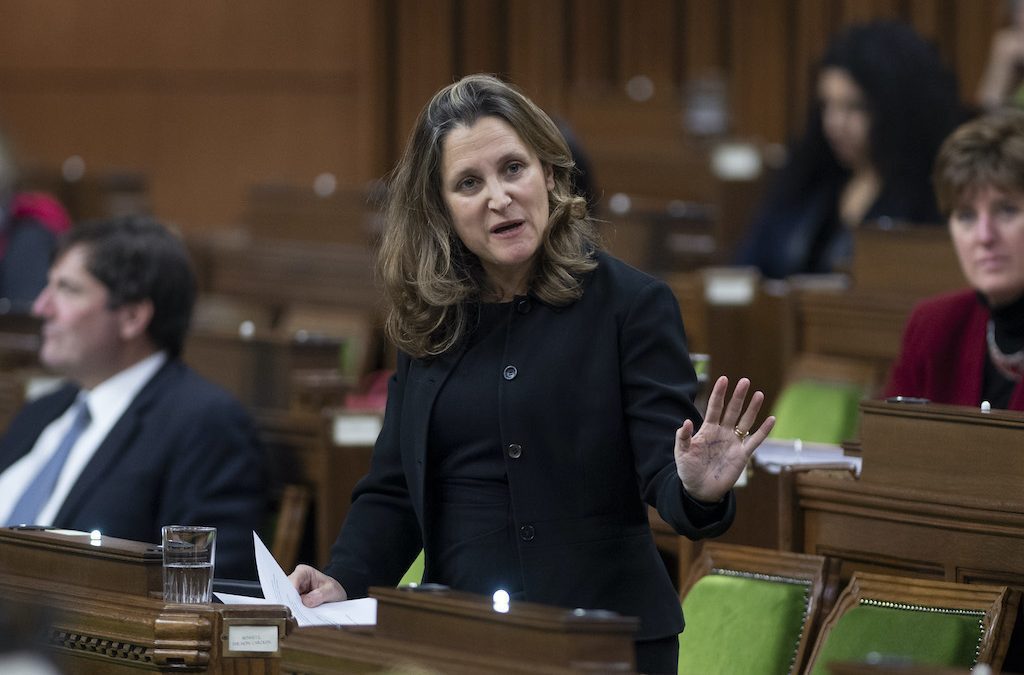
Government of Canada’s Budget 2021 Highlights

The Government of Canada’s has released its plan to repair the damage to the economy caused by COVID-19, and to ensure a resilient recovery that creates jobs and growth for Canadians.
[content_control]
 

Business Support Programs

  • Budget 2021 proposes to extend the Canada Emergency Wage Subsidy Program until September 25, 2021. It proposes to gradually decrease rent subsidy rates, beginning July 4, 2021, but includes the ability to further extend the wage subsidy program through regulations until November 20, 2021.
  • Budget 2021 proposes to extend the Canada Rent Subsidy Program and Lockdown Support until September 25, 2021. It also proposes to gradually decrease the rate of the rent subsidy, beginning July 4, 2021, but includes the ability to further extend the wage subsidy program through regulations until November 20, 2021.
  • The Canada Emergency Business Account (CEBA) has provided interest-free, partially forgivable loans. In December 2020, the Government of Canada increased the value of the loan from $40,000 to $60,000 and recently extended the application deadline to June 30, 2021. Budget 2021 proposes to extend the application deadline for similar support under the Regional Relief and Recovery Fund and the Indigenous Business Initiative until June 30, 2021.
  • Budget 2021 proposes changes to the Canada Small Business Financing Program through amendments to the Canada Small Business Financing Act and its regulations. These proposed amendments are projected to increase annual financing by $560 million, supporting approximately 2,900 additional small businesses. Proposed amendments include:
    • Expanding loan class eligibility to include lending against intellectual property and start-up assets and expenses;
    • Increasing the maximum loan amount from $350,000 to $500,000 and extending the loan coverage period from 10 to 15 years for equipment and leasehold improvements;
    • Expanding borrower eligibility to include non-profit and charitable social enterprises; and
    • Introducing a new line of credit product to help with liquidity and cover short-term working capital needs.
  • Budget 2021 proposes to introduce the new Canada Recovery Hiring Program for eligible employers that continue to experience qualifying declines in revenues relative to before the pandemic. The proposed subsidy would offset a portion of the extra costs employers take on as they reopen, either by increasing wages or hours worked, or hiring more staff. This support would only be available for active employees and will be available from June 6 to November 20, 2021. Eligible employers would claim the higher of the Canada Emergency Wage Subsidy or the new proposed subsidy.

Digitalization/Technology Adaptation Programs

  • Budget 2021 proposes launching the Canada Digital Adoption Program. The program will provide businesses with two streams of support. Eligible businesses will receive micro-grants to help offset the costs of going digital—and provide support to digital trainers from a network of up to 28,000 well trained young Canadians. Budget 2021 proposes to provide $1.4 billion over four years, starting in 2021-22, to:
    • Work with organizations across Canada to provide access to skills, training, and advisory services for all businesses accessing this program.
    • Provide micro-grants to smaller, main street businesses to support costs associated with technology adoption.
    • Create training and work opportunities for as many as 28,000 young people to help small- and medium-sized businesses across Canada adopt new technology.
  •  Budget 2021 proposes to provide $2.6 billion over four years, on a cash basis, starting in 2021-22, to the Business Development Bank of Canada to help small- and medium-sized businesses finance technology adoption.

Canada Mortgage and Housing Corporation (CMHC) Retrofit Program

  • Budget 2021 proposes to provide $4.4 billion on a cash basis ($778.7 million on an accrual basis over five years, starting in 2021-22, with $414.1 million in future years), to the CMHC to help homeowners complete deep home retrofits through interest-free loans worth up to $40,000. The program would be available by summer 2021 and support retrofits for up to 200,000 households.

Clean Technology Programs

  • Budget 2021 proposes to introduce an investment tax credit for capital invested in carbon capture, utilization, and storage (CCUS) projects, beginning in 2022.
  • Budget 2021 proposes to provide $319 million over seven years, starting in 2021-22, to Natural Resources Canada to support research and development that would improve the commercial viability of carbon capture, utilization, and storage technologies.
  • Budget 2021 proposes to reduce—by 50 per cent—the general corporate and small business income tax rates for businesses that manufacture zero-emission technologies. The reductions would go into effect on January 1, 2022 and would be gradually phased out starting January 1, 2029 and eliminated by January 1, 2032.

Workforce Development Funding

  • Budget 2021 proposes to provide $55 million over three years, starting in 2021-22, to Employment and Social Development Canada for a Community Workforce Development Program. Funding would be delivered through calls for proposals under two streams: A national stream focused on priority areas, like de-carbonization and supporting a just transition for workers in transforming sectors like energy, which would dedicate 75 per cent of funding to projects that support underrepresented groups; and a regional stream delivered by Service Canada regional offices, in partnership with regional development agencies, and focused on regional priorities.

Regulatory Initiatives

  • Budget 2021 proposes to provide up to $6.1 million over two years, starting in 2021-22, to renew the External Advisory Committee on Regulatory Competitiveness.
  • Since 2018, the Government of Canada has been conducting targeted regulatory reviews to identify and eliminate regulatory barriers to economic growth. Budget 2021 states that the second round of regulatory roadmaps will be released in the coming weeks on digitization and technology neutral regulations, international standards, and clean technology.

[/content_control]

Get Your Team Ready for the High Season

Get Your Team Ready for the High Season

With the beginning of spring comes renewed energy and excitement. As snow melts (being Canadian means you must enjoy all 4 seasons since there’s no way around Old Man winter every year), the trees awake, the birds come back (or are just louder). For some, it becomes easier to get to their BBQ, while for others like my team and me, we plan a good spring cleaning of our equipment, because it continued burning all winter long!

[content_control]

Spring is also a reminder that we need to shake off the winter dust and shake up our teams. While winter is a great time to tackle little projects around the shop, we know spring will bring more customers through the door. We need to prepare to always ensure the best customer experience is delivered.

One of the low-hanging fruits I feel is important to remind our boutique’s manager and the sales team in turn, concerns inventory. There’s no better time than spring to go through your inventory and rotate. What do you want to propose as an attractive offer to customers, to help you free up shelving space in the warehouse or in the store? Are there replacement parts you know are in greater demand when the high season approaches?  Check your inventory, rotate it, stock up on what makes sense to your audience, and make sure your staff can guide customers well. If in doubt, role play – have your most knowledgeable staff answer tricky questions in front of the team to put words in their mouth, increase their knowledge and confidence with customers.

One of the objectives of a good sales team is not to make customers buy everything but to buy what they need.  Teach your staff to ask open-ended questions. Your customers are shopping for a new BBQ or BBQ products in your store because you offer quality and expertise. They know what they want when they walk in, or at least, they think they know. By finding out customers’ interests, you can help them push their limits by suggesting they try new things. Perhaps they are not comfortable smoking food on pellets or a charcoal BBQ yet? There is always the option to use a smoker box with wood chips. The flavours developed can still be very tasty.

I work closely with my staff to ensure everyone on the floor, from my most experienced guy to the newly hired cashier, knows about products, especially our most popular ones. We develop our own flavours to suit customers’ needs. We also like to take calculated risks, with our knowledge of the BBQ industry, with out-of-the-box tasting profiles, and guess what? Customers love it and new trends are set! There is always going to be a necessity for your teams, and mine, to know the basics of BBQ and the main categories. But don’t forget what will make your customers want to come back for more is the next level stuff. Be ready to talk about how to prep and smoke or slow cook a Texan style brisket, how to leverage the spring temperature for cold smoking, pairing of rubs, sauces and wood flavours, with the various meat types or cheese and nuts. This is what makes the customer’s experience memorable; what makes them come back.

With that said, when adding new consumable products to your inventory, it’s a good idea to crack open a bottle, taste it or even take turns with the staff bringing in meats that would have been cooked at home or on a BBQ behind the shop, to taste and experience first-hand what it is you will recommend. In spring, you still have time to do that.

Spring is for some the time to clean up the BBQ from on-going winter use or to shine it up again, ahead of the warmer weather coming. The same way we don’t appreciate a clothing salesperson telling us a suit looks great on us when it’s so obvious that the cut just doesn’t work with our body type, we need to be mindful that customers are not going to buy new BBQs every season. Instead of focusing on the big ticket items, perhaps approach them by introducing pitmaster techniques with meat injection, or just the basics of cooking to temperature versus time, reiterating the importance of owning a thermometer. Your customers will come to visit the store to fill up on their favourite charcoal, sauce or rub. Presenting new products, sharing BBQ recipes or ensuring the basics are covered to kick off the season, will create loyalty with your customer base and that’s how you will see them coming back all year-round.

Spring is exciting because in-store traffic increases by the day. Making sure your team on-site understands the needs of customers and is ready to add value and answer any type of question is essential. Your store is a destination to discover. Creating an experience for customers will guarantee the traffic is ongoing, especially when a big box banner pushes an aggressive marketing campaign or on rainy days. Be ready to welcome everyone as you gear up for the High Season!

Max Lavoie

President, House of BBQ Experts
[/content_control]

HPBA Canada Briefing Material On Ontario’s Latest Restrictions

On January 14th, 2021, HPBA Canada held two virtual briefings to review and discuss relevant sections of the Ontario pandemic restrictions announced on January 12th, 2021.

Click on the image below to access the briefing deck used in this presentation.

(Please note that this material is for information purposes only, and does not constitute legal advice.)

To discuss any of these matters, feel free to contact:

Adam De Caire

Director, Public Affairs
HPBA Canada
(647) 998-4235
adam@hpbacanada.org

A Look at Canada’s Fall Economic Statement

A Look at Canada’s Fall Economic Statement

The Honourable Chrystia Freeland, Deputy Prime Minister and Minister of Finance, tabled the 2020 Fall Economic Statement (FES) on November 30, 2020. The statement, entitled Supporting Canadians and Fighting COVID-19: Fall Economic Statement 2020represents the government’s first budget-like plan since the last full budget in March 2019. As expected, FES 2020 highlights the heavy economic impact of COVID-19 on the Canadian economy, with a forecasted federal deficit of over $380 billion for the 2020-2021 fiscal year.

The FES was a mix of specific commitments as well as priorities of the government which will be further articulated through future anouncements or the spring budget. As anticipated, there were substantial spending commitments aimed at getting Canada through the pandemic, and subsequently pursuing aggressive economic recovery through stimulus spending.

Highlights of the Fall Economic Statement include:
[content_control]

  • A short-term stimulus package is valued at $70 billion to $100 billion over roughly three years. The government says the stimulus spending — intended to build a greener, more inclusive, more innovative and competitive economy — will launch after a vaccine is distributed and life begins to return to normal.
  • Increasing the maximum rate of the Canada Emergency Wage Subsidy to 75 per cent for the period beginning December 20, 2020 and extending this rate until March 13, 2021, and extending the current rates of the Canada Emergency Rent Subsidy and Lockdown Support until March 13, 2021. Both programs will be there for businesses until June 2021.
  • A new Highly Affected Sectors Credit Availability Program to support Canada’s hardest-hit industries, like tourism, hotels, arts and culture, and the air sector.
  • Laying the groundwork for a Canada-wide Early Learning and Child Care System.
  • A $1-billion fund to help provinces and territories improve COVID-19 infection control in long-term care facilities.
  • a temporary support in 2021 of up to $1,200 for each child under six for low and middle-income families eligible for the Canada child benefit (CCB).

The government projects the deficit will reach $381.6 billion by the end of March 2021 and could climb even higher, depending on factors such as the severity of shutdowns and the rate of COVID-19 infections.

A reminder that information on all Government of Canada COVID-19 related resources is available here.

For more coverage of the Fall Economic Statement, take a look at the following:

Five takeaways from the 2020 fall economic statement – Macleans

Fall Economic Statement 2020: Let the Questions BeginPolicy Magazine

Liberals to spend $100B to jolt post-pandemic economy after posting record $381B deficitCBC

Fall Economic Statement 2020 Briefing – Osler

To discuss any of these matters, feel free to contact:

Adam De Caire

Director, Public Affairs
HPBA Canada
(647) 998-4235
adam@hpbacanada.org

[/content_control]

Review of Fall 2020 Provincial Elections (BC, SK, NB)

Review of Fall 2020 Provincial Elections (BC, SK, NB)

The fall of 2020 saw voters in three Canadian provinces head to the polls as part of provincial general elections. This article looks at the election results in British Columbia, Saskatchewan, and New Brunswick, and policy implications those results may have.

[content_control]

British Columbia

Election Date: October 24th, 2020

Governing Party Prior To The Election:  B.C. New Democratic Party (Minority)

Governing Party Following The Election:  B.C. New Democratic Party (Majority)

New Seat Breakdown:

Government: British Columbia New Democratic Party (57)
Opposition: British Columbia Liberal Party (28)
Third party: British Columbia Green Party (2)

Having governed for three-and-a-half years as part of a coalition government with the B.C. Green Party, Premier John Horgan drew criticism for his decisions to call a snap election on September 21st. Thankfully for he and his party however, the voters of B.C. did not hold the election call against the party, returning the B.C. NDP back to the legislature, this time with a strong majority mandate. This is the second government in as many months to head to the polls early and convert a minority mandate into a majority one, just as New Brunswick Premier Plaine Higgs did in September.

The years ahead will see the B.C. NDP Government pursue the commitments made in their 2020 Campaign Platform “Working For You”. Elements of the platform that may be of interest to industry members include:

  • Commit BC to achieving net-zero emissions by 2050: CleanBC currently sets a target of reducing emissions by 40 percent by 2030. To complete the task, we will pass legislation requiring BC to reach net-zero by 2050 – meaning there are either no harmful carbon emissions or they are offset by natural carbon sinks, carbon capture or other technologies.
  • Require greener buildings: We are already requiring new buildings and retrofits to be more energy efficient and cleaner – every new building constructed in BC must be net-zero ready by 2032. We will take the next step by empowering local governments to set their own carbon pollution performance standards for new buildings. And we will require realtors to provide energy efficiency information on listed homes to incent energy-saving upgrades and let purchasers know what energy bills they will face.
  • Accelerate energy efficiency retrofits beginning now: We will spur more energy-efficiency upgrades with programs and incentives for both residential and commercial buildings – including PACE (Property Assessed Clean Energy) financing that allows homeowners to take out loans for efficiency upgrades and pay them back over time through annual property taxes.

Want to know more about your local Member of the Legislative Assembly? CLICK HERE TO FIND OUT.

Saskatchewan

Election Date: October 26th, 2020

Governing Party Prior To The Election:  Saskatchewan Party (Majority)

Governing Party Following The Election:  Saskatchewan Party (Majority)

New Seat Breakdown:

Government: Saskatchewan Party (48)
Official Opposition: New Democratic Party (13)

Of the three provincial elections held this fall, Saskatchewan’s was the only one which was the result of a fixed election date. The election resulted in very little change in the make-up of the legislature, with Saskatchewan Party Leader and Premier Scott Moe returning with a strong majority mandate.

The party campaigned on their platform “Our Plan For A Strong Saskatchewan,” which includes the following items of interest to industry”

  • Reducing Taxes on Small Businesses: A re-elected Saskatchewan Party government will introduce a three-year reduction to the small business tax rate, as part of the Saskatchewan Party’ plan to support Saskatchewan’s economic recovery from COVID-19. This will help support Saskatchewan small businesses sustain operations, retain and hire new employees, and grow their businesses.
  • The Saskatchewan Party government unveiled “Prairie Resilience,” our made in Saskatchewan Climate Change Strategy, which will reduce emissions in a meaningful way. These commitments will reduce annual greenhouse gas emissions by 12 million tonnes by 2030.
  • A re-elected Saskatchewan Party government will introduce a new Saskatchewan Home Renovation Tax Credit to make the cost of home renovations more affordable. The Saskatchewan Home Renovation Tax Credit will allow Saskatchewan homeowners to claim a non-refundable 10.5% provincial tax credit on eligible
    home renovation expenses undertaken on their primary residence between October 1st 2020 and December 31st, 2022.

Want to know more about you local Member of the Legislative Assembly? CLICK HERE TO FIND OUT.

New Brunswick

Election Date: September 14th, 2020

Governing Party Prior To The Election:  Progressive Conservative Party of New Brunswick (Minority)

Governing Party Following The Election:  Progressive Conservative Party of New Brunswick (Majority)

New Seat Breakdown:

Government: Progressive Conservative Party of New Brunswick (27)
Opposition: New Brunswick Liberal Party (17)
Third Party: Green Party of New Brunswick (3)
Fourth Party: People’s Alliance of New Brunswick (2)

As with British Columbia, the snap election call worked out favourably for Premier Blaine Higgs and the Progressive Conservative party, Mr. Higgs. the first Premier since 2003 to win a second term. The conservatives hold a modest majority in the Legislature with 27 seats.

Up To The Job: Recover, Reinvent, Renew,” saw the party make the following commitments of note:

  • Helping businesses compete in a digital economy will be absolutely key to the province’s long-term success when international trade missions are no longer occurring and travel is restricted. Under our leadership, Opportunities New Brunswick will be working with our businesses across the province to support their transition to a digital economy so sales and exports can continue. They will support businesses in learning how to sell online, use enhanced marketing and e-commerce strategies, and promote our province’s brand through social media.
  • Productivity must improve to help New Brunswick businesses close the gap. Opportunities New Brunswick is designing programs to offer assessments and help our businesses close the productivity gap – especially our manufacturers who are struggling to scale their operations. This could mean embracing robotics, artificial intelligence, and just using existing technologies more effectively to increase outputs and improve overall competitiveness so they can weather this storm and come out the other end stronger.
  • Importantly, our government will ensure that energy consumption and greenhouse gas emissions from new constructions will be at least 25 percent lower than National Building Code requirements.

Want to know more about you local Member of the Legislative Assembly? CLICK HERE TO FIND OUT.

HPBA Canada will follow the progress on the commitments made throughout these campaigns, and continue to provide updates to members.

To discuss any of these matters, feel free to contact:

Adam De Caire

Director, Public Affairs
HPBA Canada
(647) 998-4235
adam@hpbacanada.org
[/content_control]

Working from the Warmth of Home

Working from the Warmth of Home

Picture this: It’s mid afternoon on a cool October weekday, and you are about to log on to your fourth virtual meeting of the day. Most of the other callers will be in front of a bland background. Maybe a wall, or a bookshelf if they decide to get fancy. There may be one or two people on the call who are both adventurous and tech-savvy enough to use a virtual background: a sandy beach, their favourite golf course, or a luxurious office space that doesn’t really exist. And then there is you. You’re poised with the comfort and ambiance of a real fireplace just over your shoulder. Congratulations. You have won the meeting, and it hasn’t even started yet!

With the COVID-19 pandemic transforming how and where Canadians work, it’s no surprise that sales of home improvement and outdoor entertainment goods have been strong this summer.

“You’re looking at about $3.5 billion in sales in the month of June — that’s the latest figure from StatsCan. Not only higher than it was in May but it’s actually higher than it was in June last year — so you’ve actually seen growth over the comparable month pre-COVID,” said Karl Littler, Senior Vice-President of Public Affairs for the Retail Council of Canada.

Whether investing to take your home office to the next level, up the cozy-level in a bedroom, or adding new style and animation to a living space that may be seeing more living than usual for the foreseeable future, a fireplace adds warmth, elegance, and comfort to your home like nothing else.

If you haven’t explored what is available in the fireplace market recently, you will be pleasantly surprised at the flexibility of styles, sizes and fuel types now available, which provide nearly infinite options for location, design, and functionality within a home:

Fuel Options

  • Natural Gas remains a great option for beauty, warmth and convenience
  • Of course, some will opt for the traditional authenticity and comfort of a woodburning appliance
  • Ethanol or Alcohol Gel models offer the beauty of real flame with no smoke or smell, do not require any chimney or venting, and as a result can be installed virtually anywhere.
  • Electric fireplaces offer an alternative to real flame, which will appeal to some for safety, convenience, or design purposes

Heating vs. Decorative

You may also be surprised to know that not all fireplaces are designed to heat the space around them. Ethanol and alcohol gel models generally produce little heat, and Natural Gas, Electric, and even woodburning appliances can also be configured with little heat output for those seeking the aesthetic benefits of the appliance over heating functionality.

Design

To discuss trends and design options, HPBA Canada spoke with Adriana Mot, Principal of Toronto-based Dochia Interior Design since 2000. Both an architect and interior designer by training, Adriana has a unique perspective on the fireplace as a key design feature: “A fireplace can be a mix of art and architecture, and a feature element in any space”.

Adriana has identified the trends she has experienced with her most recent hearth projects:

  • Open flame, when safely available, is very much in, both indoors and outdoors. Outdoors, the feature can be a place to gather together. Indoors, it’s just something cool.
  • Simple and sleek linear fireplaces always remain popular.
  • Two sided fireplaces are popular, and can positively change the relationship between two rooms, such as tying a working space into a more family oriented space.
  • Three sided fireplaces are an elegant way to divide an otherwise open space.
  • Many clients are looking for ambiance and visual presence over heat production.

On the topic of working from home, Adriana notes “the office or work space is traditionally somewhere private and quiet, so adding the animation of a fireplace to the space where you will be working can make it feel less isolated and more comfortable while maintaining the necessary privacy.

Adriana has worked with beautiful appliances from a number of HPBA Canada member companies, referencing Canadian companies Montigo and Napoleon, as part of her more recent work, and has regular contact with many of the industry’s manufacturers to keep abreast of the latest developments in innovation and design.

Adriana Mot, Principal
Dochia Interior Design

If you are considering home updates in the near future, consider the beauty and animation of a feature fireplace.